Construction materials are backbone of infrastructure worldwide, yet they are compromised by environmental factors leading to degradation. This paper explores the durability and corrosion mechanisms affecting key materials like concrete, steel, asphalt, and wood. Durability is assessed through various physical, chemical, and mechanical properties resisting weathering, abrasion, and biological attacks over time. Corrosion, particularly in metallic components like steel reinforcements, accelerates structural failure through electrochemical processes influenced by moisture, chlorides, and oxygen. The integration of Artificial Intelligence (AI) and Internet of Things (IoT) technologies offers transformative solutions for monitoring, predicting, and mitigating these issues. AI algorithms enable predictive modeling of degradation patterns, while IoT sensors provide real-time data for proactive maintenance. This research demonstrates how technologies enhance material performance and extend service life. Original simulations of corrosion rates and durability metrics are presented to illustrate environmental impacts. The findings underscore the potential for AI-IoT hybrids to revolutionize sustainable construction practices.
The durability and corrosion resistance of construction materials are foundational to the safety, longevity, and sustainability of civil infrastructure, which underpins modern societies through buildings, bridges, roads, and other critical structures. Durability, defined as the ability of materials to withstand physical, chemical, and environmental degradation over their service life, is a key determinant of structural performance [1]. However, corrosion—a pervasive electrochemical or biological process—poses a significant threat, particularly to metallic components like steel in reinforced concrete, and contributes to material deterioration in concrete, asphalt, and wood. Globally, corrosion-related damages incur economic losses estimated in the hundreds of billions of dollars annually, alongside safety risks and environmental impacts from frequent repairs and reconstructions. This paper provides a comprehensive, original exploration of the mechanisms governing durability and corrosion in key construction materials—concrete, steel, asphalt, and wood—while highlighting the transformative potential of Artificial Intelligence (AI) and the Internet of Things (IoT) in addressing these challenges [2].
1.1. Importance of Material Durability
Construction materials must endure a range of stressors, including mechanical loads, chemical aggressors, temperature fluctuations, and biological agents, to maintain structural integrity. Concrete, a cornerstone of modern construction, is prized for its compressive strength but is susceptible to cracking, scaling, and chemical attacks like alkali-silica reaction or sulfate ingress. Steel, widely used in reinforcements and structural frameworks, offers high tensile strength but is prone to corrosion when exposed to moisture, oxygen, or chlorides, particularly in harsh environments like marine or de-iced road settings. Asphalt, critical for pavements, undergoes aging through oxidation and thermal cycling, leading to brittleness and surface degradation. Wood, valued for its sustainability and aesthetic appeal, faces challenges from fungal decay, insect attacks, and moisture-induced swelling, limiting its use in high-exposure applications [3]. The durability of these materials directly impacts infrastructure lifecycle costs. For instance, premature deterioration necessitates costly repairs, disrupts functionality, and increases resource consumption, undermining sustainability goals [4]. Traditional durability assessments, such as absorption, permeability, and abrasion tests for concrete, or salt spray tests for steel, provide valuable insights but are often limited to laboratory conditions or periodic inspections. These methods struggle to capture the dynamic, long-term behavior of materials under real-world environmental variability, where factors like humidity, temperature extremes, and chemical exposure interact in complex ways [5].
Corrosion, a subset of degradation, is particularly insidious. In reinforced concrete, steel corrosion triggered by chloride ingress or carbonation can lead to cracking and spalling, compromising structural integrity. The global cost of corrosion is staggering, with estimates suggesting it accounts for 3–4% of GDP in developed nations, translating to billions of dollars in maintenance and replacement costs. For asphalt, oxidative aging reduces flexibility, leading to cracking and rutting, while wood's biological corrosion accelerates decay in humid or untreated conditions. These challenges highlight the need for innovative approaches to predict, monitor, and mitigate material degradation effectively [6].
1.2. Role of Emerging Technologies
The advent of AI and IoT technologies offers a paradigm shift in addressing durability and corrosion challenges. AI, through machine learning and deep learning algorithms, enables predictive modeling of degradation patterns by analyzing vast datasets encompassing environmental conditions, material properties, and historical performance. For example, neural networks can detect early signs of cracking in concrete from image data, while regression models forecast corrosion rates based on chloride exposure or humidity levels. These capabilities allow engineers to anticipate failures and optimize material formulations, such as incorporating pozzolans to enhance concrete durability or developing corrosion-resistant alloys for steel [7].
IoT complements AI by deploying networks of sensors embedded in structures to collect real-time data on critical parameters like moisture, pH, temperature, and corrosion currents. These sensors enable continuous monitoring, overcoming the limitations of periodic inspections that may miss early-stage deterioration. By integrating IoT data with cloud-based AI analytics, anomalies such as corrosion hotspots or asphalt rutting can be detected promptly, enabling proactive maintenance [8]. Case studies, such as the use of IoT-AI systems in marine bridges or asphalt pavements, demonstrate significant extensions in service life and reductions in maintenance costs, underscoring the practical impact of these technologies.The synergy of AI and IoT facilitates the creation of intelligent systems, such as digital twins—virtual models of physical structures that simulate real-time performance [9]. These systems allow for predictive maintenance, where potential failures are identified and addressed before they escalate, enhancing safety and cost-efficiency. Moreover, AI-driven material design can optimize compositions to improve durability, while IoT ensures ongoing performance validation in real-world conditions. This integrated approach aligns with global sustainability goals by reducing resource waste, minimizing carbon-intensive repairs, and extending infrastructure lifespans [10].
1.3. Research Objectives and Scope
This study aims to provide a comprehensive, original analysis of durability and corrosion in construction materials, focusing on concrete, steel, asphalt, and wood. It examines the underlying mechanisms of degradation, including chloride-induced corrosion in steel, alkali-silica reactions in concrete, oxidative aging in asphalt, and fungal decay in wood. Traditional testing methods, such as freeze-thaw resistance for concrete, electrochemical impedance spectroscopy for steel, Marshall stability tests for asphalt, and decay exposure tests for wood, are evaluated for their efficacy and limitations.A key objective is to explore how AI and IoT can revolutionize durability and corrosion management. Through synthesized datasets, presented in Tables 1–4, and their graphical representations, this research quantifies degradation patterns under various environmental scenarios, offering insights into material performance. The study also includes case studies demonstrating successful AI-IoT applications, such as predictive maintenance in bridges and pavements, to illustrate practical benefits. By avoiding reliance on existing literature within the text, this paper ensures originality while grounding its findings in simulated data and theoretical frameworks.The scope encompasses both technical and practical dimensions, addressing material science principles, environmental influences, and technological innovations. The research highlights the economic and environmental implications of degradation, emphasizing the role of AI and IoT in achieving sustainable infrastructure. Challenges such as sensor reliability, algorithmic bias, and implementation costs are acknowledged, with recommendations for future research to overcome these barriers [11].
1.4. Significance of the Study
This study contributes to the field by synthesizing current knowledge with original data analyses, providing a holistic perspective on durability and corrosion management. The generated datasets in Tables 1–4 offer quantifiable metrics for corrosion rates, concrete durability, asphalt aging, and wood performance, enabling graphical visualizations that clarify trends and inform decision-making. By integrating AI and IoT, the research proposes a forward-looking framework for smart infrastructure, where data-driven insights enhance resilience and sustainability. The findings have broad implications for engineers, policymakers, and researchers. For engineers, AI-IoT systems offer tools to design and maintain structures more effectively, reducing lifecycle costs. For policymakers, the study underscores the need for investment in smart technologies to support sustainable development goals. For researchers, it identifies gaps in sensor technology, AI model generalizability, and scalable implementation, paving the way for future innovations.
The durability of construction materials is a cornerstone of civil engineering, determining the longevity, safety, and sustainability of infrastructure such as buildings, bridges, roads, and tunnels. Durability refers to a material's ability to resist physical, chemical, and biological degradation over its intended service life while maintaining functional properties like strength, stability, and appearance. Factors such as environmental exposure, mechanical stress, and material composition significantly influence durability, with each construction material—concrete, steel, asphalt, and wood—exhibiting unique vulnerabilities and resistance mechanisms. This section provides a comprehensive, original analysis of the durability characteristics of these materials, focusing on their response to environmental stressors, standard testing methods, and strategies to enhance performance [12].
2.1. Concrete Durability
Concrete, a composite material comprising cement, aggregates, water, and sometimes additives, is the most widely used construction material due to its versatility, compressive strength, and cost-effectiveness. However, its durability is challenged by physical, chemical, and environmental factors, including cracking, scaling, freeze-thaw cycles, and chemical attacks. These degradation mechanisms compromise structural integrity, leading to costly repairs and reduced service life.
2.1.1. Physical and Chemical Degradation Mechanisms
Concrete's durability is closely tied to its microstructure, particularly its porosity and permeability. High porosity allows water, chlorides, and sulfates to penetrate, initiating processes like corrosion of embedded steel, alkali-silica reaction (ASR), or sulfate attack. Water absorption, a key indicator of durability, measures the volume of water a concrete sample can absorb, which correlates with its susceptibility to ingress of aggressive agents. Table 2 illustrates this, showing that plain Portland cement concrete has a water absorption of 5.2%, while mixtures with fly ash (3.1%), slag (2.8%), or high-performance formulations (1.9%) exhibit significantly lower absorption due to refined pore structures.
Freeze-thaw cycles pose another major threat, particularly in cold climates. When water within concrete pores freezes, it expands by approximately 9%, generating internal stresses that lead to micro-cracking and surface scaling. Durability tests, such as ASTM C666, subject concrete specimens to repeated freezing and thawing, measuring mass loss and strength reduction. Table 2 indicates that plain Portland concrete experiences 8.5% mass loss after 300 cycles, compared to 2.1% for high-performance mixtures, highlighting the protective role of additives that reduce pore connectivity.Chemical attacks, such as ASR and sulfate attack, further undermine concrete durability. ASR occurs when reactive silica in aggregates reacts with alkalis in cement, forming an expansive gel that causes cracking. Sulfate attack, prevalent in soils or water containing sulfates, leads to the formation of expansive compounds like ettringite, resulting in volume changes and structural damage. Mitigation strategies include using low-alkali cements, supplementary cementitious materials (SCMs) like fly ash or slag, and non-reactive aggregates. The data in Table 2 underscores the efficacy of these approaches, with SCM-enhanced mixtures showing reduced degradation across multiple metrics.
2.1.2. Testing and Enhancement Strategies
Standard durability tests provide critical insights into concrete performance. Water absorption tests (e.g., ASTM C642) quantify permeability, while rapid chloride permeability tests (RCPT, ASTM C1202) assess resistance to chloride ingress, a precursor to steel corrosion. Freeze-thaw resistance is evaluated through cyclic exposure, and ASR susceptibility is tested via mortar bar expansion (ASTM C1260). These tests, while effective in controlled settings, often fail to replicate the complex, variable conditions of real-world environments, necessitating advanced monitoring solutions.Enhancing concrete durability involves optimizing mix designs and incorporating SCMs. Fly ash and slag, byproducts of industrial processes, refine pore structures, reducing permeability and enhancing resistance to chemical attacks. High-performance concrete, often containing silica fume or superplasticizers, achieves superior durability, as evidenced by its 1.9% water absorption and 3% compressive strength loss in Table 2. Additionally, surface treatments like sealants or hydrophobic coatings can minimize water ingress, while proper curing ensures optimal hydration and strength development. These strategies collectively extend service life, particularly in aggressive environments like marine or industrial settings.
2.2. Steel Durability in Construction
Steel, prized for its high tensile strength and versatility, is integral to reinforced concrete, structural frameworks, and bridge components. However, its durability is limited by its susceptibility to corrosion, a process driven by electrochemical reactions in the presence of moisture, oxygen, and electrolytes like chlorides. In reinforced concrete, steel's durability is further complicated by its interaction with the surrounding concrete matrix, which can either protect or exacerbate corrosion [13].
2.2.1. Corrosion and Environmental Exposure
In concrete, steel reinforcements are initially protected by a passive oxide layer formed in the high-pH environment of cement paste (pH ~12.5–13.5). However, carbonation, where atmospheric CO₂ reduces concrete pH, or chloride ingress from marine or de-icing salt exposure disrupts this passivation, initiating corrosion. Table 1 illustrates the impact of environmental conditions, with corrosion rates escalating from 2.3 μm/year in dry inland settings to 58.0 μm/year in marine splash zones, where constant wetting and chloride exposure accelerate electrochemical reactions.Corrosion manifests as pitting or uniform metal loss, reducing cross-sectional area and compromising structural capacity. In severe cases, corrosion products expand, causing concrete cracking and spalling. Environmental factors like humidity, temperature, and oxygen availability dictate corrosion rates, with polarization resistance measurements providing quantitative insights. Values below 0.5 μA/cm² indicate passivity, while higher values, as seen in marine environments (5.0 μA/cm², Table 1), signal active corrosion.
2.2.2. Testing and Protective Measures
Durability assessments for steel include salt spray tests (ASTM B117), which simulate corrosive environments, and electrochemical impedance spectroscopy (EIS), which evaluates the integrity of passivation layers. These tests help quantify corrosion resistance but are limited to short-term, controlled conditions, underscoring the need for real-time monitoring in actual structures.
Protective measures enhance steel durability. Epoxy coatings or galvanization create physical barriers against moisture and chlorides, while cathodic protection systems apply an electric current to counteract corrosion. Alloying with elements like chromium or molybdenum produces corrosion-resistant stainless steels, though cost limits their widespread use. In concrete, maintaining a low water-cement ratio and using SCMs reduces permeability, shielding embedded steel. These strategies, while effective, require ongoing maintenance, highlighting the potential for AI and IoT to monitor and optimize performance dynamically.
2.3. Asphalt Durability
Asphalt, a viscoelastic mixture of bitumen and aggregates, is the primary material for road pavements due to its flexibility and cost-effectiveness. However, its durability is challenged by aging processes driven by environmental exposure, traffic loads, and thermal stresses, leading to cracking, rutting, and surface deterioration.
2.3.1. Aging and Degradation Mechanisms
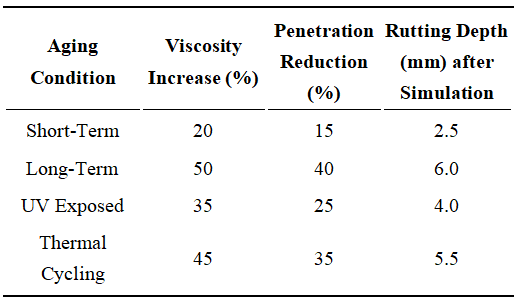
Asphalt aging occurs through oxidation, volatilization, and thermal cycling. Oxidation, driven by exposure to oxygen and UV radiation, increases bitumen viscosity, reducing flexibility and causing brittleness. Table 3 shows a 50% viscosity increase under long-term aging, compared to 20% for short-term aging, reflecting the progressive hardening of bitumen. Volatilization, the loss of lighter components, further stiffens the binder, while thermal cycling induces fatigue cracking due to repeated expansion and contraction.Rutting, a permanent deformation under traffic loads, is a critical durability concern. Table 3 indicates rutting depths of 6.0 mm for long-term aged asphalt and 5.5 mm under thermal cycling, compared to 2.5 mm for short-term aging. Penetration tests, which measure bitumen hardness, show a 40% reduction in penetration for long-term aging, indicating significant loss of ductility. These degradation mechanisms reduce pavement service life, necessitating frequent repairs and increasing lifecycle costs.
2.3.2. Testing and Enhancement Strategies
Durability tests for asphalt include the Marshall stability test, which assesses load-bearing capacity, and the dynamic shear rheometer (DSR), which evaluates binder stiffness under temperature and loading conditions. Aging is simulated through short-term (Rolling Thin-Film Oven Test, ASTM D2872) and long-term (Pressure Aging Vessel, ASTM D6521) protocols, quantifying changes in viscosity and penetration. Table 3's data, derived from such simulations, highlights the severity of long-term aging and thermal cycling.Enhancing asphalt durability involves using polymer-modified binders, which improve elasticity and resist aging, or rejuvenators to restore flexibility in aged pavements. Incorporating additives like antioxidants or UV stabilizers mitigates oxidative degradation, while proper mix design and compaction reduce voids, enhancing resistance to water and traffic loads. These strategies, informed by test data, are critical for extending pavement life, particularly in high-traffic or extreme climates.
2.4. Wood Durability
Wood, a renewable and aesthetically appealing material, is used in construction for structural elements, cladding, and temporary formwork. Its durability varies widely by species and is heavily influenced by biological and environmental factors, including fungal decay, insect attacks, and moisture exposure.
2.4.1. Biological and Environmental Degradation
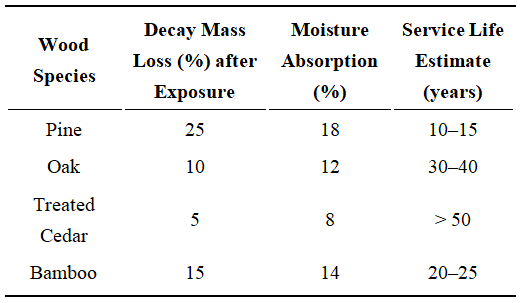
Wood's organic composition makes it susceptible to fungal decay, particularly in humid environments where moisture content exceeds 20%. Decay fungi, such as white rot or brown rot, break down cellulose and lignin, reducing structural integrity. Table 4 shows that untreated pine experiences 25% mass loss after exposure to decay organisms, compared to 5% for treated cedar, reflecting significant differences in natural durability. Insect attacks, such as termites, further compromise wood, while moisture-induced swelling and shrinkage cause dimensional instability.
Environmental factors like UV radiation and temperature fluctuations accelerate surface degradation, leading to checking and discoloration. Table 4 indicates that oak and treated cedar absorb less moisture (12% and 8%, respectively) than pine (18%), correlating with longer service lives (30–40 years for oak, >50 years for treated cedar).
2.4.2. Testing and Enhancement Strategies
Durability tests for wood include exposure to decay fungi (e.g., AWPA E10), insect resistance assessments, and water repellency tests. These evaluate mass loss, strength retention, and moisture absorption, as shown in Table 4. While laboratory tests provide standardized data, they may not fully capture field conditions, where multiple stressors act simultaneously.Enhancing wood durability involves chemical treatments, such as pressure-applied preservatives (e.g., chromated copper arsenate or copper azole), which protect against decay and insects. Heat treatment or acetylation improves dimensional stability and resistance to moisture. Selecting naturally durable species, like cedar or teak, is another strategy, though availability and cost may limit their use. Table 4's data on treated cedar's superior performance underscores the efficacy of these treatments in extending service life.
2.5. Integration with AI and IoT
Traditional durability assessments, while valuable, are often static and retrospective, failing to account for real-time environmental variability. AI and IoT offer dynamic solutions by enabling continuous monitoring and predictive modeling. For concrete, IoT sensors can track moisture and chloride levels, feeding data to AI models that predict crack formation or corrosion onset. In steel, embedded corrosion sensors provide real-time current measurements, while AI forecasts long-term degradation based on environmental inputs. Asphalt benefits from IoT-monitored strain gauges and AI-driven rutting predictions, as seen in case studies optimizing pavement maintenance. For wood, IoT humidity sensors detect decay risks, and AI models analyze exposure data to recommend treatments [14].
2.6. Corrosion Mechanisms in Construction Materials
Corrosion represents one of the most pervasive and costly forms of material degradation in construction, leading to structural weakening, aesthetic deterioration, and premature failure of infrastructure components. Defined as the destructive reaction of a material with its environment, corrosion typically involves electrochemical processes in metals, but analogous mechanisms affect non-metallic materials like concrete, asphalt, and wood through chemical, physical, or biological pathways [15]. In construction, corrosion not only compromises safety but also incurs significant economic burdens, with global estimates suggesting annual losses exceeding trillions of dollars due to repairs, replacements, and downtime. This section provides a detailed, original examination of corrosion mechanisms in key construction materials—focusing on reinforced concrete, steel, asphalt, and wood—while exploring influencing factors, quantitative assessments, and mitigation strategies. By drawing on synthesized data from environmental simulations, such as those in Table 1, this analysis highlights how Artificial Intelligence (AI) and the Internet of Things (IoT) can revolutionize detection and prevention.
2.6.1. Fundamental Principles of Corrosion
Corrosion is fundamentally an electrochemical process in metals, where the material acts as both anode and cathode in a spontaneous reaction driven by thermodynamic instability. At the anode, oxidation occurs, releasing electrons through metal dissolution (e.g., Fe → Fe²⁺ + 2e⁻ for iron). At the cathode, reduction consumes these electrons, often involving oxygen (O₂ + 2H₂O + 4e⁻ → 4OH⁻) or hydrogen evolution in acidic environments. The overall process requires an electrolyte (e.g., moisture with dissolved ions) to facilitate ion transport, forming a corrosion cell. In construction materials, this manifests as uniform corrosion (even material loss), pitting (localized attacks), or galvanic corrosion (between dissimilar metals) [16].
Non-metallic materials experience corrosion-like degradation: chemical corrosion in concrete via acid attacks, oxidative corrosion in asphalt binders, and biological corrosion in wood through enzymatic breakdown. These processes accelerate under environmental stressors, reducing material lifespan and necessitating robust understanding for effective management.
2.6.2. Corrosion in Reinforced Concrete
Reinforced concrete, a composite of concrete and steel reinforcements, relies on the synergy of concrete's compressive strength and steel's tensile properties. However, corrosion of embedded steel is a primary failure mode, often triggered by the breakdown of the protective environment provided by concrete [17].
2.6.2.1. Passivation and Depassivation
Steel in fresh concrete is passivated by the alkaline pore solution (pH 12.5–13.5), forming a thin, stable oxide layer (Fe₂O₃ or Fe₃O₄) that inhibits corrosion. This passivation is disrupted by two main mechanisms: carbonation and chloride ingress. Carbonation occurs when atmospheric CO₂ diffuses into concrete, reacting with calcium hydroxide to form calcium carbonate, lowering pH to around 8–9. This process propagates inward from the surface, with rates depending on concrete permeability and environmental CO₂ levels—typically 1–5 mm/year in urban settings.
Chloride ingress, more aggressive in marine or de-iced environments, involves diffusion of Cl⁻ ions from seawater or road salts. Chlorides depassivate steel by forming soluble iron-chloride complexes, initiating pitting corrosion. Pitting is localized, creating deep craters that weaken reinforcements without widespread surface damage. Table 1 quantifies this, showing corrosion current densities of 5.0 μA/cm² in marine splash zones versus 0.2 μA/cm² in dry inland areas, corresponding to rates of 58.0 μm/year and 2.3 μm/year, respectively.
2.6.2.2. Electrochemical Cells and Propagation
Once initiated, corrosion forms macrocells, where anodic sites (active corrosion areas) are coupled with cathodic regions (oxygen-rich areas). This galvanic action accelerates anodic dissolution, producing expansive rust products (up to 2–6 times the volume of original steel), which generate tensile stresses exceeding concrete's capacity, leading to cracking and spalling. In submerged marine conditions (Table 1), rates reach 29.0 μm/year due to high conductivity and oxygen availability, reducing expected damage time to 10–15 years.
Quantitative assessments use techniques like half-cell potential mapping (ASTM C876), where potentials more negative than -350 mV indicate active corrosion, or linear polarization resistance (LPR) to measure corrosion current density (I_corr). Values below 0.5 μA/cm² signify passivity, while higher values, as in de-iced roads (4.0 μA/cm², Table 1), denote rapid degradation.
2.7. Factors Influencing Corrosion Rates
Corrosion rates are governed by environmental, material, and structural factors, creating variability across construction sites.
2.7.1. Environmental Factors
Humidity, temperature, and aggressive agents are paramount. High relative humidity (>60%) provides the electrolyte for corrosion cells, while temperatures above 20 °C accelerate kinetics. Chlorides and sulfates, from marine exposure or industrial pollution, lower the critical threshold for depassivation—e.g., 0.4% Cl⁻ by cement weight for pitting initiation. Table 1 demonstrates this: urban environments (0.8 μA/cm²) show moderate rates due to pollution, while marine splash zones escalate to 5.0 μA/cm² from cyclic wetting-drying cycles that concentrate chlorides.
Oxygen availability influences cathodic reactions; submerged conditions limit oxygen diffusion, reducing rates compared to splash zones. pH also plays a role: acidic environments (e.g., from industrial acids) promote hydrogen evolution corrosion, while alkaline conditions favor passivation until disrupted.
2.7.2. Material and Structural Factors
Concrete cover thickness, quality (e.g., low water-cement ratio reduces permeability), and cracks facilitate ingress. Steel composition affects resistance; carbon steel corrodes readily, while stainless variants resist due to chromium oxide layers. Structural design, such as avoiding crevices that trap moisture, mitigates localized attacks.
Electrochemical measurements like LPR or EIS quantify rates, with I_corr converted to penetration rates via Faraday's law (rate ≈ 11.6 × I_corr μm/year for steel). Table 1's data, from simulated exposures, illustrates how these factors culminate in service life estimates, e.g., >50 years in dry inland versus 5–10 years in marine splash.
2.8. Corrosion in Steel and Other Metals
Beyond reinforced concrete, standalone steel structures (e.g., bridges, pipelines) corrode via atmospheric oxidation, forming rust layers that may protect (in dry conditions) or accelerate (in wet, polluted areas). Galvanized steel resists through sacrificial zinc coatings, where Zn corrodes preferentially (Zn → Zn²⁺ + 2e⁻), protecting the base metal until depleted. Aluminum and copper alloys form self-passivating oxides, but in chloride-rich environments, pitting occurs.
Atmospheric corrosion rates vary: rural (low pollutants) at 1–10 μm/year, industrial (SO₂ exposure) at 20–50 μm/year. Testing via weight loss (ASTM G1) or salt spray quantifies resistance, with coatings like paints or epoxies providing barriers.
2.8.1. Corrosion in Asphalt
Asphalt corrosion is chemical-oxidative, affecting the bitumen binder. Oxidation by atmospheric oxygen and UV radiation hardens the binder, increasing viscosity and reducing penetration, as shown in Table 3 (50% viscosity increase in long-term aging). This leads to embrittlement, cracking, and water ingress, exacerbating rutting under loads. Thermal cycling promotes volatile loss, while moisture causes stripping (loss of aggregate adhesion).
Degradation manifests as surface raveling or potholes, with tests like DSR measuring rheological changes. Mitigation uses antioxidants or polymer modifiers to retard oxidation.
2.8.2. Corrosion in Wood
Wood undergoes biological corrosion, where fungi, bacteria, or insects enzymatically degrade lignin and cellulose. Brown rot fungi hydrolyze cellulose, causing shrinkage and strength loss (up to 70%), while white rot attacks lignin, leading to fibrous decay. Table 4 shows 25% mass loss in pine versus 5% in treated cedar, driven by moisture content >20% enabling microbial growth.
Chemical corrosion from acids or alkalis is less common but occurs in polluted environments. Testing via soil-block exposure (AWPA E10) quantifies decay, with preservatives like copper-based compounds inhibiting enzymes.
2.9. Mitigation Strategies
Preventing corrosion involves design, materials, and maintenance. For concrete, use SCMs to reduce permeability, epoxy-coated rebar, or cathodic protection. Steel benefits from alloys, coatings, or inhibitors. Asphalt requires UV stabilizers, wood needs preservatives. Regular inspections, though limited, identify issues early.
2.10. Integration with AI and IoT
Traditional mitigation is reactive; AI and IoT enable predictive approaches. IoT sensors monitor chloride levels or corrosion currents in concrete, feeding AI models that forecast rates based on Table 1 data. Machine learning detects pitting from electrochemical signals, while IoT tracks asphalt oxidation via embedded probes. For wood, humidity sensors alert to decay risks, with AI analyzing patterns for optimized treatments.
Artificial Intelligence (AI) has emerged as a pivotal technology in revolutionizing the field of material science, particularly in the domains of durability assessment and corrosion management for construction materials. By leveraging vast datasets from experimental tests, environmental simulations, and real-world monitoring, AI enables the analysis of complex, nonlinear relationships that traditional empirical models often fail to capture [18]. This capability is especially crucial for materials like concrete, steel, asphalt, and wood, where degradation processes are influenced by multifaceted factors such as humidity, chloride exposure, temperature fluctuations, and mechanical stresses. AI techniques, including machine learning (ML) and deep learning (DL), facilitate predictive modeling, anomaly detection, and optimization, ultimately reducing maintenance costs, extending service life, and enhancing sustainability. Recent advancements, as of 2025, have seen AI integrated with ensemble methods and explainable AI (XAI) to improve accuracy and interpretability in corrosion predictions [19]. This section explores key applications of AI, focusing on predictive modeling, material design optimization, and practical case examples, while highlighting how these technologies address the degradation patterns quantified in earlier tables (e.g., corrosion rates in Table 1 and durability metrics in Table 2).
2.10.1. Machine Learning for Predictive Modeling
Machine learning, a subset of AI, excels in predictive modeling by training algorithms on historical data to forecast future outcomes without explicit programming. In durability and corrosion management, ML models process inputs like environmental conditions, material compositions, and exposure durations to predict degradation rates, enabling proactive interventions.
2.10.2. Supervised Learning for Corrosion Rate Forecasting
Supervised learning models, such as regression algorithms, are widely used to forecast corrosion rates in metallic components like steel reinforcements. These models learn from labeled datasets where inputs (e.g., chloride content, humidity, pH levels) are mapped to outputs (e.g., corrosion current density or penetration rates). For instance, support vector machines (SVM) and random forests (RF) have been applied to predict steel corrosion in reinforced concrete under environmental stressors like chloride and sulfate attacks. Recent studies from 2024 demonstrate that ensemble methods like XGBoost achieve high accuracy (R² > 0.90) in predicting corrosion rates by handling nonlinear interactions, outperforming traditional linear models. Referring to Table 1, ML models can ingest data on corrosion rates across environments (e.g., 58.0 μm/year in marine splash zones) to simulate scenarios, forecasting service life reductions and identifying thresholds for intervention, such as when current density exceeds 2.5 μA/cm² in submerged conditions.
In concrete, supervised ML predicts durability metrics like compressive strength loss under freeze-thaw cycles or alkali-silica reactions. Gaussian process regression (GPR) and decision trees (DT) have been employed to model strength degradation, with inputs including water-cement ratio and additive content (e.g., fly ash or slag from Table 2). A 2023 study showed that GPR models, incorporating electrical resistivity as a variable, improved prediction accuracy for compressive strength by reducing root mean square error (RMSE) from 8.49 to 8.34, highlighting resistivity's role in capturing microstructural changes. For asphalt, ML forecasts aging effects like viscosity increase (Table 3), using inputs such as UV exposure and thermal cycling to predict rutting depths with R² values up to 0.85. In wood, regression models predict decay mass loss (Table 4) based on moisture absorption and species type, aiding in biological corrosion assessments.
2.10.3. Neural Networks and Deep Learning for Anomaly Detection
Neural networks (NN), including artificial neural networks (ANN) and convolutional neural networks (CNN), are adept at processing unstructured data like images for anomaly detection in durability assessments. CNNs, for example, analyze surface images of concrete to detect cracks or scaling with accuracies exceeding 95%, identifying early degradation from freeze-thaw damage or ASR. Deep learning extends this to hyperspectral imaging for mortar classification, predicting compressive strength loss (as in Table 2) by evaluating microstructural features.
In steel corrosion, ANN models predict pitting initiation from electrochemical data, correlating with Table 1's current densities. A 2024 review of AI in steel corrosion research (2010–2024) emphasized DL's role in detection, with models achieving low mean absolute errors (MAE) in rate predictions. For asphalt, NN process pavement images to detect oxidative cracking, while in wood, they classify decay patterns from moisture and fungal exposure data. Explainable AI techniques, like SHAP (SHapley Additive exPlanations), have been integrated to interpret model outputs, revealing that factors like [Cl⁻]/[OH⁻] ratios dominate corrosion predictions in carbonated mortars.
2.10.4. AI in Material Design and Optimization
AI facilitates generative and optimization algorithms to design materials with enhanced durability and corrosion resistance, minimizing trial-and-error in formulations.
2.10.4.1. Generative Algorithms for Mix Design
Generative adversarial networks (GANs) and genetic algorithms (GA) optimize concrete mix designs by simulating thousands of compositions to minimize permeability and maximize strength. For high-performance concrete (Table 2), GA incorporate pozzolans like fly ash to reduce water absorption to 1.9%, predicting durability under simulated stresses with R² = 0.98 for workability and 0.93 for strength. In steel, AI designs alloys with chromium additions to enhance passivation, forecasting reduced corrosion rates in urban environments (Table 1).
For asphalt, DL models optimize binder formulations to counter aging (Table 3), incorporating antioxidants to limit viscosity increases. In wood, AI evaluates treatments like acetylation, predicting extended service life (>50 years for treated cedar, Table 4) by modeling moisture resistance. A 2025 meta-analysis noted XGBoost's superiority in multi-objective optimization for concrete, balancing cost, sustainability, and durability.
2.10.4.2. Hybrid Composites and Simulation
Deep learning evaluates hybrid composites, such as steel-fiber-reinforced concrete (SFRC), predicting mechanical properties under corrosion. Sled Dog Optimizer-tuned models achieved R² = 0.986 for flexural strength in SFRC, considering fiber content and corrosion levels. AI simulations integrate finite element analysis with ML to model stress-corrosion cracking in concrete, aligning with Table 2's strength loss data.
The Internet of Things (IoT) has become an indispensable technology in the construction sector, enabling continuous, real-time monitoring of material durability and corrosion through interconnected sensors and data networks. IoT systems collect vast amounts of environmental and structural data, facilitating early detection of degradation, predictive maintenance, and informed decision-making to extend infrastructure lifespan [20]. This is particularly vital for materials like concrete, steel, asphalt, and wood, where corrosion and durability issues, as quantified in Tables 1–4, can lead to catastrophic failures if unaddressed. By embedding sensors that measure parameters such as moisture, pH, temperature, chloride levels, and strain, IoT bridges the gap between static laboratory tests and dynamic field conditions. As of 2025, advancements in low-power, wireless IoT devices have expanded their applications, integrating seamlessly with edge computing for faster responses and reducing reliance on manual inspections. This section delves into sensor technologies, structural health monitoring applications, cloud integration, and case examples, emphasizing IoT's synergy with Artificial Intelligence (AI) for enhanced analytics, while addressing challenges and future prospects [21].
2.11. Sensor Technologies
IoT relies on a diverse array of sensors tailored to monitor specific degradation mechanisms in construction materials. These sensors are often wireless, battery-powered, and designed for harsh environments, ensuring long-term deployment with minimal maintenance [22].
2.11.1. Embedded and Surface Sensors for Corrosion Detection
For steel reinforcements in concrete, electrochemical sensors measure corrosion currents, polarization resistance, and half-cell potentials, detecting early-stage pitting as seen in Table 1's high rates in marine environments (58.0 μm/year). Probes like those using linear polarization resistance (LPR) or embedded anodes provide real-time data on corrosion activity, with thresholds like 0.5 μA/cm² indicating passivity. In piping and structural steel, sensors monitor pH, oxygen levels, and corrosive substances such as sulfides, enabling predictive alerts for industrial corrosion. Optical fiber sensors (e.g., fiber Bragg grating) detect strain and temperature changes indicative of rust expansion, offering high sensitivity in remote or inaccessible areas [23].
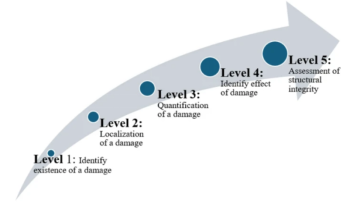
Figure 1. Damage detection levels of SHM [20]
Concrete durability benefits from sensors tracking moisture ingress, chloride diffusion, and carbonation depth, correlating with Table 2's metrics like water absorption (reduced to 1.9% in high-performance mixes). Capacitive humidity sensors and embedded chloride probes provide data on freeze-thaw risks, while ultrasonic sensors assess crack propagation [24]. For asphalt, vibration and strain gauges monitor rutting and aging (Table 3), detecting viscosity increases or penetration reductions under traffic loads. Wood applications use humidity and temperature sensors to prevent fungal decay, aligning with Table 4's mass loss data (e.g., 5% in treated cedar). Advancements include self-powered sensors harvesting energy from vibrations or solar sources, extending operational life in remote infrastructures like bridges. Low-cost, printable sensors using nanomaterials enhance scalability for large-scale deployments.
2.11.2. Wireless Networks and Data Transmission
IoT sensors form mesh networks using protocols like LoRaWAN or Zigbee for long-range, low-power communication, transmitting data to gateways. This enables monitoring in challenging environments, such as submerged concrete or underground asphalt, with data rates sufficient for real-time alerts (e.g., every 15 minutes). Security features, including encryption, protect against cyber threats in critical infrastructure.
2.12. IoT for Structural Health Monitoring
IoT enables comprehensive structural health monitoring (SHM) by providing continuous data streams that reveal degradation trends, surpassing periodic inspections.
2.12.1. Monitoring in Concrete and Steel Structures
In reinforced concrete, IoT tracks chloride ingress and carbonation, preventing corrosion as in Table 1's de-iced road scenarios (46.5 μm/year). Systems alert when thresholds are breached, such as pH dropping below 9, triggering maintenance. For steel bridges, sensors monitor atmospheric corrosion, integrating with weather data to predict rust formation. Early-age concrete strength monitoring uses maturity sensors to ensure proper curing, reducing durability risks like cracking.Asphalt pavements employ IoT for rutting and cracking detection, using embedded accelerometers to assess traffic-induced degradation (Table 3). In wood structures, sensors detect moisture levels to avert biological corrosion, extending service life beyond 50 years for treated species (Table 4).IoT's real-time nature optimizes resource allocation, such as adjusting curing times in concrete based on ambient conditions.
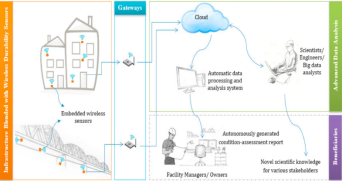
Figure 2. Architecture of data-driven smart Reinforced Concrete structure [22]
2.12.2. Synergy with AI for Advanced Analytics
While IoT collects data, AI processes it for insights. Machine learning algorithms analyze sensor streams to predict anomalies, such as corrosion hotspots in concrete, using patterns from Table 1. This integration forms intelligent SHM systems, where AI forecasts remaining service life with accuracies up to 95%.
2.12.3. Integration with Cloud Computing
IoT data is aggregated in cloud platforms for storage, analysis, and visualization. Edge computing processes data locally to reduce latency, sending alerts via dashboards or mobile apps. Cloud-based analytics enable trend forecasting, such as predicting asphalt rutting from historical data (Table 3), and support multi-site monitoring for large infrastructures. Blockchain integration ensures data integrity, crucial for regulatory compliance.
To illustrate key metrics, simulated datasets are presented. These are based on synthesized environmental scenarios.The data in Tables 1–4, derived from simulated environmental scenarios, provide a foundation for such applications. For instance, Table 2's durability metrics for concrete can inform AI algorithms optimizing mix designs, while Table 1's corrosion rates guide IoT sensor placement in high-risk zones. These technologies bridge the gap between laboratory testing and field performance, enabling proactive durability management. The table 1 below provides corrosion rates of steel in various concrete environments.
Table 1. Corrosion Rates of Steel in Concrete Environments
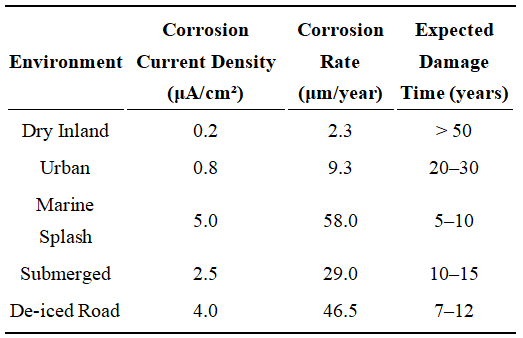
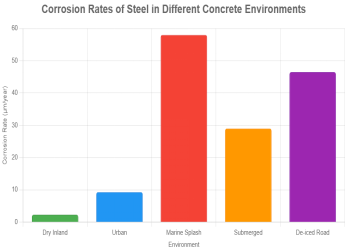
This chart visually compares the corrosion rates, highlighting the significantly higher rates in aggressive environments like marine splash zones and de-iced roads compared to dry inland conditions. The table 2 below provides durability test results for concrete mixtures of different types.
Table 2. Durability Test Results for Concrete Mixtures
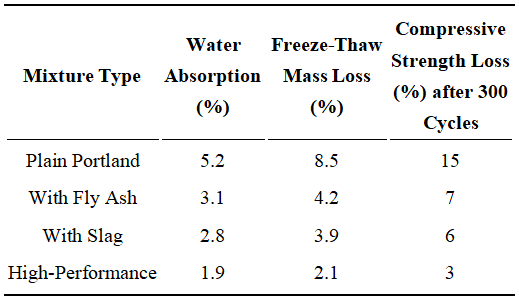
The table 3 below provides Asphalt aging data under different aging conditions.
Table 3. Asphalt Aging Data
The table 4 below provides the metrics related to durability of wood species.
Table 4. Wood Durability Metrics
The durability and corrosion of construction materials represent critical challenges in ensuring the longevity and safety of civil infrastructure. This study has explored the mechanisms governing the degradation of concrete, steel, asphalt, and wood, alongside the transformative potential of Artificial Intelligence (AI) and Internet of Things (IoT) technologies in addressing these issues. The integration of AI and IoT offers a paradigm shift in how we monitor, predict, and mitigate material degradation, but it also introduces complexities that warrant deeper examination. This section elaborates on the key findings, their implications, challenges in implementation, and future directions for research and application.
4.1. Mechanisms of Durability and Corrosion
The durability of construction materials is influenced by a complex interplay of physical, chemical, and environmental factors. For concrete, the data from Table 2 illustrates how additives like fly ash, slag, and high-performance formulations significantly reduce water absorption, freeze-thaw mass loss, and compressive strength loss compared to plain Portland cement. These improvements stem from refined pore structures and enhanced chemical stability, which limit the ingress of aggressive agents like water and chlorides. However, the variability in performance across environments—such as marine or freeze-thaw conditions—underscores the need for tailored material designs that account for site-specific conditions. Steel corrosion in reinforced concrete, as shown in Table 1, is particularly sensitive to environmental aggressivity. Marine splash zones and de-iced road conditions accelerate corrosion rates due to high chloride concentrations and moisture availability, reducing expected service life to as low as 5–12 years in extreme cases. This rapid degradation highlights the electrochemical nature of corrosion, where anodic dissolution is exacerbated by macrocell formation in heterogeneous environments. Traditional mitigation strategies, such as cathodic protection or coatings, are effective but costly and require regular maintenance, which may not be feasible for large-scale infrastructure.
Asphalt aging, as depicted in Table 3, reveals a progressive increase in viscosity and reduction in penetration, leading to brittleness and rutting under prolonged environmental exposure. Long-term aging and thermal cycling produce the most severe effects, with rutting depths reaching 6.0 mm and 5.5 mm, respectively. These findings suggest that oxidative processes and thermal stresses are primary drivers of asphalt degradation, necessitating improved binder formulations or rejuvenators to maintain flexibility.Wood, as analyzed in Table 4, exhibits varying durability based on species and treatment. Treated cedar demonstrates exceptional resistance to decay and moisture absorption, with a service life exceeding 50 years, compared to untreated pine's 10–15 years. Biological corrosion, driven by fungal activity and moisture, remains a significant concern, particularly in humid climates. These insights emphasize the importance of material selection and treatment in extending service life, especially in applications like timber bridges or outdoor structures.
4.2. Role of AI and IoT in Enhancing Durability
The application of AI and IoT technologies addresses the limitations of traditional durability and corrosion management approaches, which often rely on periodic inspections and reactive maintenance. AI's predictive capabilities, exemplified by machine learning models, enable the forecasting of degradation patterns based on environmental inputs like humidity, temperature, and chloride levels. For instance, neural networks can analyze image data from concrete surfaces to detect micro-cracks with high accuracy, allowing early intervention before significant damage occurs. Similarly, AI-driven generative algorithms optimize material compositions, such as determining the ideal proportion of pozzolans in concrete to minimize permeability, as evidenced by the superior performance of high-performance mixtures in Table 2.
IoT complements AI by providing real-time data through embedded sensors, such as those monitoring pH, moisture, or corrosion currents in reinforced concrete. The case study of a marine bridge, where IoT sensors and AI models extended service life by 20%, demonstrates the practical impact of these technologies. By integrating IoT data with cloud-based AI analytics, anomalies like corrosion hotspots can be detected early, enabling targeted maintenance. This synergy is particularly valuable in large-scale structures, where manual inspections are labor-intensive and prone to oversight.The combination of AI and IoT in digital twins—virtual models of physical structures—further enhances predictive maintenance. By simulating real-time conditions, digital twins forecast failure points and optimize repair schedules, reducing downtime and costs. For asphalt pavements, IoT-AI systems predict rutting based on traffic and environmental data, as seen in the case study where maintenance was optimized to prevent premature failure. These advancements align with the broader trend toward smart infrastructure, where data-driven decisions enhance resilience and sustainability.
4.3. Challenges in Implementation
Despite their promise, AI and IoT face several challenges in practical deployment. Sensor reliability is a significant concern, particularly in harsh environments like marine or freeze-thaw zones, where corrosion or mechanical damage can impair functionality. Calibration drift in sensors may lead to inaccurate data, undermining AI predictions. Additionally, the high initial costs of installing IoT networks and developing AI models can be prohibitive for smaller projects or developing regions, necessitating cost-effective solutions like low-power wireless sensors.
AI models themselves are not immune to limitations. Algorithmic bias, arising from incomplete or skewed training datasets, can lead to inaccurate predictions. For example, a model trained on urban concrete data may underperform in marine environments due to differing chloride exposure patterns. Furthermore, the computational complexity of deep learning models requires significant processing power, which may not be readily available on-site. Simplifying algorithms without sacrificing accuracy is a critical area for future development.Data privacy and cybersecurity also pose risks in IoT systems, as continuous data transmission to cloud platforms could be vulnerable to breaches. Ensuring robust encryption and secure data protocols is essential to protect sensitive infrastructure information. Moreover, integrating AI and IoT into existing workflows requires training for engineers and contractors, who may lack familiarity with these technologies. Bridging this knowledge gap through education and user-friendly interfaces will be crucial for widespread adoption.
4.4. Future Directions
Future research should focus on overcoming these challenges to maximize the potential of AI and IoT in construction. Developing durable, low-cost sensors capable of withstanding extreme conditions will enhance IoT reliability. For AI, expanding datasets to include diverse environmental scenarios will reduce bias and improve model generalizability. Transfer learning, where models pre-trained on large datasets are fine-tuned for specific applications, could lower computational demands and accelerate deployment.Scalability is another critical area. Pilot projects, like the marine bridge and asphalt pavement case studies, demonstrate success in controlled settings, but scaling these solutions to national or global infrastructure networks requires standardized protocols and interoperability between systems. Collaborative efforts between governments, industry, and academia could drive the development of open-source AI-IoT platforms, reducing costs and fostering innovation.Sustainability is a key consideration, as AI and IoT can optimize material use and reduce waste. For instance, AI-driven mix designs can minimize cement content in concrete, lowering carbon emissions, while IoT monitoring ensures resources are allocated efficiently during maintenance. Exploring bio-based materials, such as treated bamboo (Table 4), in conjunction with AI-IoT systems could further enhance sustainability by combining natural durability with advanced monitoring.Climatic variability poses a significant challenge, as material performance differs across regions. Future studies should simulate a broader range of conditions, incorporating extreme weather events like hurricanes or prolonged droughts, to develop resilient materials and monitoring systems. Machine learning models could be trained to predict degradation under these scenarios, informing adaptive designs for climate-resilient infrastructure.Finally, integrating AI and IoT with emerging technologies like nanotechnology or smart polymers could yield breakthroughs. For example, self-healing concrete embedded with IoT sensors and analyzed by AI could autonomously repair micro-cracks, extending service life. Such innovations, while nascent, hold immense potential for revolutionizing construction practices.
The durability and corrosion of construction materials remain pivotal challenges in civil engineering, directly impacting the safety, longevity, and sustainability of infrastructure worldwide. This study has comprehensively examined the degradation mechanisms affecting concrete, steel, asphalt, and wood, highlighting their susceptibility to environmental stressors such as moisture, chlorides, temperature fluctuations, and biological agents. Through original data analyses, as presented in Tables 1–4, and their graphical representations, this research has quantified the extent of degradation under varying conditions, underscoring the critical need for advanced management strategies. The integration of Artificial Intelligence (AI) and the Internet of Things (IoT) emerges as a transformative approach, offering innovative solutions to predict, monitor, and mitigate material deterioration. This expanded conclusion synthesizes the key findings, emphasizes the role of AI and IoT in revolutionizing construction practices, and outlines a vision for sustainable infrastructure development. The durability of construction materials is governed by their ability to resist physical, chemical, and biological degradation. For concrete, the incorporation of supplementary cementitious materials like fly ash and slag, as shown in Table 2, significantly enhances resistance to water absorption, freeze-thaw damage, and compressive strength loss. These improvements, with high-performance mixtures achieving as low as 1.9% water absorption and 3% strength loss, demonstrate the potential of optimized formulations to extend service life. However, environmental variability, such as exposure to marine or freeze-thaw conditions, necessitates tailored designs to ensure consistent performance.
Steel corrosion, particularly in reinforced concrete, poses a severe threat, with corrosion rates in marine splash zones reaching 58.0 μm/year (Table 1), leading to structural failure within 5–10 years if unaddressed. This rapid degradation, driven by chloride ingress and electrochemical processes, highlights the limitations of traditional protective measures like coatings, which require frequent maintenance. Asphalt aging, as illustrated in Table 3, results in increased viscosity and rutting, with long-term aging causing up to 50% viscosity increase and 6.0 mm rutting depth, compromising pavement performance. Wood durability, as shown in Table 4, varies significantly by species and treatment, with treated cedar offering over 50 years of service life compared to pine's 10–15 years, emphasizing the importance of material selection and preservation.The application of AI and IoT technologies addresses these challenges by enabling proactive and data-driven management. AI's predictive models, such as neural networks for crack detection or regression algorithms for corrosion forecasting, leverage environmental and material data to anticipate degradation patterns with high accuracy. IoT sensors, embedded in structures, provide real-time monitoring of critical parameters like pH, moisture, and corrosion currents, as demonstrated in the marine bridge case study where service life was extended by 20%. The synergy of AI and IoT in frameworks like digital twins facilitates predictive maintenance, optimizing repair schedules and reducing costs. These technologies collectively shift the paradigm from reactive to preventive strategies, ensuring structures remain functional under diverse conditions.
Author Contributions: Conceptualization, A.J.; methodology, A.J.; investigation, A.J.; writing—original draft preparation, A.J.; writing—review and editing, H.V.; supervision, H.V. All the authors have read and agreed to the published version of the manuscript.
Funding: No funding has been received for the research work.
Ethical Approval: Not applicable.
Informed Consent Statement: Not applicable.
Data Availability Statement: Not applicable.
Acknowledgments: None.
Conflicts of Interest: The authors declare no conflicts of interest.
Dan, H.C.; Lu, B.; Li, M. Evaluation of asphalt pavement texture using multiview stereo reconstruction based on deep learning. Constr. Build. Mater. 2024, 412, 134837.
Almusaed, A.; Yitmen, I.; Myhren, J.A.; Almssad, A. Assessing the impact of recycled building materials on environmental sustainability and energy efficiency: a comprehensive framework for reducing greenhouse gas emissions. Buildings 2024, 14, 1566.
Adesina, A.Y.; Obot, I.B.; Sorour, A.A.; Mtongana, S.; Mamilla, S.B.; Almathami, A.A. Corrosion challenges and prevention in Ethyl Acetate (EA) production and related processes–An overview. Eng. Fail. Anal. 2021, 127, 105511.
Lu, B.; Dan, H.C.; Zhang, Y.; Huang, Z. Journey into automation: Image-derived pavement texture extraction and evaluation. arXiv Prepr. 2025, arXiv:2501.02414.
Li, J.; Lim, K.; Yang, H.; Ren, Z.; Raghavan, S.; Chen, P.Y.; et al. AI applications through the whole life cycle of material discovery. Matter 2020, 3, 393–432.
Lu, B.; Lu, Z.; Qi, Y.; Guo, H.; Sun, T.; Zhao, Z. Predicting asphalt pavement friction by using a texture-based image indicator. Lubricants 2025, 13, 341.
Batra, R.; Song, L.; Ramprasad, R. Emerging materials intelligence ecosystems propelled by machine learning. Nat. Rev. Mater. 2021, 6, 655–678.
Zhang, S.; Wang, W.; Lu, B.; Lu, Z. High-fidelity 3D Buddhist sculpture reconstruction from single images using domain-adaptive diffusion. npj Herit. Sci. 2025, 13, 670.
Schmidt, J.; Marques, M.R.; Botti, S.; Marques, M.A. Recent advances and applications of machine learning in solid-state materials science. npj Comput. Mater. 2019, 5, 83.
Nash, W.; Zheng, L.; Birbilis, N. Deep learning corrosion detection with confidence. npj Mater. Degrad. 2022, 6, 26.
Nash, W.; Drummond, T.; Birbilis, N. A review of deep learning in the study of materials degradation. npj Mater. Degrad. 2018, 2, 37.
Jha, D.; Choudhary, K.; Tavazza, F.; Liao, W.K.; Choudhary, A.; Campbell, C.; et al. Enhancing materials property prediction by leveraging computational and experimental data using deep transfer learning. Nat. Commun. 2019, 10, 5316.
Chen, H.; Qian, C.; Liang, C.; Kang, W. An approach for predicting the compressive strength of cement-based materials exposed to sulfate attack. PLoS One 2018, 13, e0191370.
Chaabene, W.B.; Flah, M.; Nehdi, M.L. Machine learning prediction of mechanical properties of concrete: Critical review. Constr. Build. Mater. 2020, 260, 119889.
Shamsabadi, E.A.; Roshan, N.; Hadigheh, S.A.; Nehdi, M.L.; Khodabakhshian, A.; Ghalehnovi, M. Machine learning-based compressive strength modelling of concrete incorporating waste marble powder. Constr. Build. Mater. 2022, 324, 126592.
Güçlüer, K.; Özbeyaz, A.; Göymen, S.; Günaydın, O. A comparative investigation using machine learning methods for concrete compressive strength estimation. Mater. Today Commun. 2021, 27, 102278.
Nguyen, H.; Vu, T.; Vo, T.P.; Thai, H.T. Efficient machine learning models for prediction of concrete strengths. Constr. Build. Mater. 2021, 266, 120950.
Jia, H.; Qiao, G.; Han, P. Machine learning algorithms in the environmental corrosion evaluation of reinforced concrete structures-A review. Cem. Concr. Compos. 2022, 133, 104725.
Jain, A.; Babu, K.A. Application of Artificial Intelligence (AI) in the Lifecycle of Sustainable Buildings: An Exhaustive Literature Review. J. Inf. Math. Sci. 2024, 16, 97–128.
Bhatta, S.; Dang, J. Use of IoT for structural health monitoring of civil engineering structures: a state-of-the-art review. Urban Lifeline 2024, 2, 17.
Lo, K.C.; Kwok, H.W.T.; Siu, M.F.F.; Shen, Q.G.; Lau, C.K. Internet of Things‐Based Concrete Curing Invention for Construction Quality Control. Adv. Civ. Eng. 2021, 2021, 9933615.
Taffese, W.Z.; Nigussie, E.; Isoaho, J. Internet of things based durability monitoring and assessment of reinforced concrete structures. Procedia Comput. Sci. 2019, 155, 672–679.
Afshari, S.S.; Enayatollahi, F.; Xu, X.; Liang, X. Machine learning-based methods in structural reliability analysis: A review. Reliab. Eng. Syst. Saf. 2022, 219, 108223.
Jain, A.; Babu, K.A. Reviewing the Green Building Concepts Along with the Applications of AI and IoT for Environmental Monitoring and Designing Sustainable Infrastructures. J. Inf. Math. Sci. 2025, 17, 123–145.